Undas 2023

Around this time I usually think about family and loved ones who have passed away. November 2 is Undas (All Saints’ Day), my favorite Filipino holiday. It’s a time for us to pause, gather at the cemetery, and honor our family and ancestors.

I’ve been trying to write this poem for a year; I was finally able to write it earlier this month although it’s still a work in progress. I hope it brings some comfort.

A translation

It’s been a year
since my uncle and aunt passed away,
two months apart.
One, unexpectedly.
The other, the inevitable release of air.

It’s been a year
since they died and I still
don’t understand why we say in English:
I’m sorry for your loss.
I’m sorry.


The same words we use to make excuses,
to admit fault or responsibility—
words spoken sometimes with sarcasm.

Ordinary, common words for something that isn’t ordinary at all.


My friend explains to me that in Korea
there is a specific phrase they use when the president dies.
A phrase only used in that instance.
A death considered so sacred and so precious
even the words bow down and pay their respects.

In Tagalog, we say:
Nakikiramay kami.
A translation:
We sympathize.

This is what I hear:
Nakikiramay kami.
We are with you.
We are here, with you.

Dear Memory

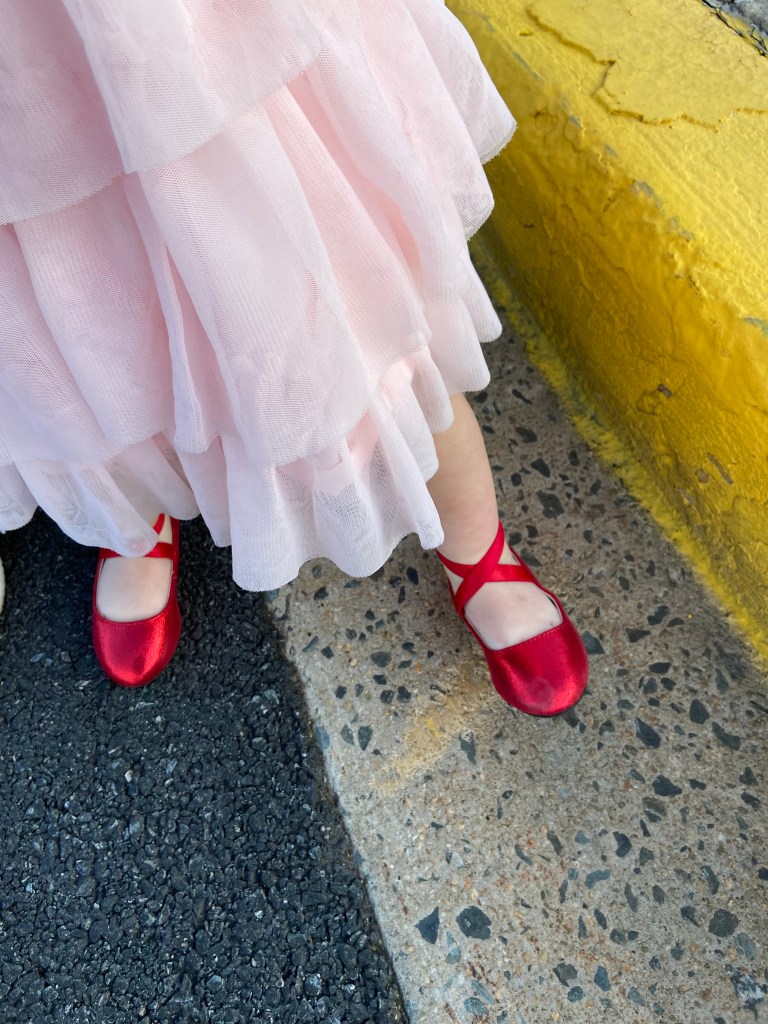
I recently finished reading Victoria Chang’s Dear Memory: Letters on Writing, Silence, and Grief and it inspired me to write in the epistolary style. This letter is inspired by the photo (below) I took recently of a family friend’s child.

Dear Sister,

The little girl turned two years old today. You should have seen her in her pink dress and ruby-red shoes. Her dress reminded me of the one our mother made for my 7th birthday. Do you remember that dress? The skirt with its layers of peach tulle.

The little girl ran around the parking lot, a flurry of pink and a flash of red. We tried to hold her back but she pulled us along until we resisted and planted our feet. You should have seen how she struggled to lead us to a destination of her choice, how badly she wanted to be free.

She is not mine but there are times now when she glances at me when she starts to play with another toy or makes a move toward the washi tape all neat and ordered in the acrylic box in my office. She looks up at me, her eyes searching, waiting to see if I will say something, or if I will rush over and stop her from touching things that aren’t hers.

She is only two and already I am trying to control her behavior, molding her to be obedient, to suppress her curiosity and playfulness. Is this what happened to me? To us?

I hear Lola in my voice every time I try to stop her movements. I don’t know if Lola would be proud or if she would find it funny that I of all her grandchildren turned out to be the most like her.

Do you remember how she would inspect the dishes after I washed them? This is why I waste so much water and soap, scrubbing more than once, brushing my fingers along every inch of the plate, checking for dried bits of rice I may have missed. Every time, it has to pass her inspection.

There was that moment when you must’ve been 11 or 12 and I was 8 or 9 when you accidentally dropped a tray of drinking glasses in the kitchen of our old apartment by the local high school. I don’t remember what Lola said to you; all I remember is Dad’s anger because she was more concerned about the broken glass than she was about you, centimeters away from bleeding.

We know now that doing something wrong does not mean there is anything wrong with us. Or do I? I look at that little girl’s eyes and I wonder if I ever looked like that (or still look like that), waiting for approval or disapproval, not knowing if one action will fill me with so much shame that I wouldn’t try it again. If all this time I haven’t let myself run and play without judgment like I used to out in the streets of Kawit, the town where I was born.

A free write for the Lunar New Year

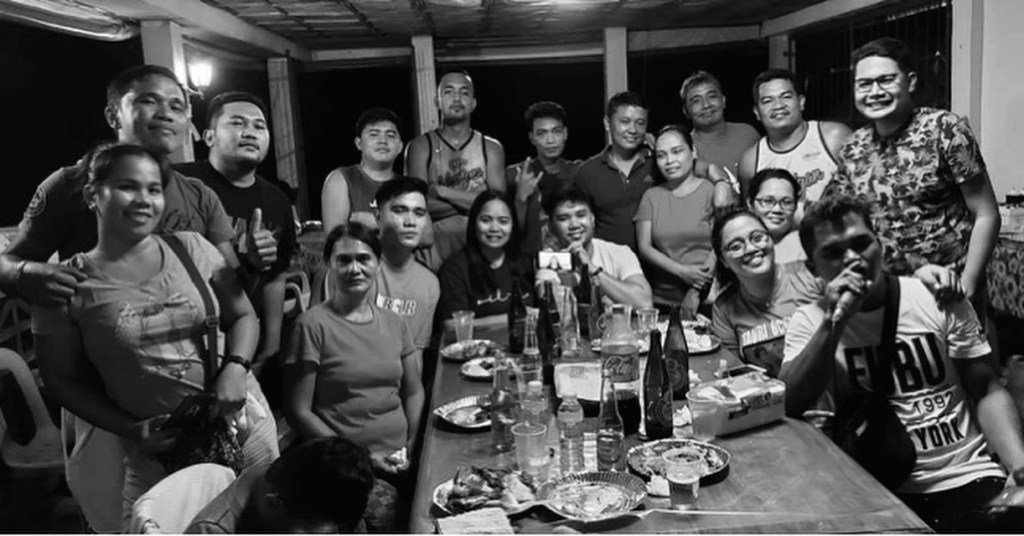
My cousins in the Philippines sent photos of their mini gathering a few weeks ago and it made me miss them and being around family so much. That, along with friends celebrating Lunar New Year with their inherited and chosen families, inspired this free write:

At this kitchen table

This kitchen table is the beginning
and never the end. 
New friends are welcomed here. 
Old friends have cried here. 
We yell and laugh here, 
at this kitchen table. 

This kitchen table 
has endured coffee spills
and knife cuts. 
It has heard its share of tsismis. 
It holds the weight of a family bickering
about money, careers, bad behavior. 

Holiday meals have been served here. 
Ordinary meals, party buffets, 
merienda prepared by grandparents, 
the occasional snacks and beer. 

Stories have been exchanged here. 
Stories are being written here. 
Lives are being lived here, 
at this kitchen table. 

I’m writing to survive

Two poems poured out of me right when I was about to sleep. So here they are for anyone who needs it.

take care 
mag-ingat ka

two words that usually means
drive carefully —— don’t speed
watch where you walk —— look both ways before you cross

two words uttered by mothers
whose children hurry to leave
wave away the worry once again

two words to chase away the spirits
a chant
a talisman
a prayer
that follows us home

They’re both pretty raw, but so am I.

Tell me——
How do we protect each other?
Cradle each other’s life
Like our own heartbeats
Hold each other tight to the chest like armor
How do we make space for each other?
Give without reward or recognition
Unwind the strings meant to strangle us

Tell me——
How do we protect our immigrant mothers and grandmothers?
Their backs sacrificed for cash and 2nd generation dreams

Will they ever tell us
They had a bad day at work?

Tell me——
Will you/we listen?

Reading until the sun rises

A few days ago I started to read Randy Ribay’s novel, Patron Saints of Nothing. I was about half-way through when something compelled me to read even though it was already way past a decent hour to go to bed. I ended up reading the novel to the end, closing the book as the sun started to rise, beams of light chasing away the need for a lamp light.

I couldn’t stop reading it. In my hands was the first book I had ever read that mirrored the experiences I, myself, could not write. About the times I went back to the Philippines, the contradictions many of us who were born on the archipelago but grew up in the US feel but can’t describe. The guilt we feel sometimes, the judgments we so easily think and speak, the times we fall silent, the awkwardness as we try to connect with cousins whose life experience feels so separate and strange from our own. The recognition of—or is it the yearning for—belonging in a place we barely remember. I cried and not just because of what actually happens in the novel, but because of how real it was to me, how it took thirty years to read about myself. (Let me confess now: I do have shallow tears when it comes to films, but not with books.)

It was similar to the first time I read Maxine Hong Kingston’s The Woman Warrior. I was in high school, I think. My sister had brought the book home after reading it for a college class. I connected to it as an Asian American woman, fighting battles with your family, finding the worth of your own voice. But Patron Saints of Nothing hit me on another level. I’m still trying to find the words to explain. Maybe I don’t have to. I know how much it means to me. I know the moments I stopped briefly, to nod in acknowledgement. Yes, this happened to me too. Yes, I felt this way too.

I will carry this novel with me for a long time. I will carry it with me.